Contents
How NFTs Work in Plain Terms
At the core is the blockchain, a public database that anyone can audit. When you mint an NFT, you create a token with a unique identifier and attach attributes: creator address, a link or hash to the media, and rules for royalties. The token then lives on-chain, while the media often sits on decentralized storage like IPFS or Arweave, or sometimes a centralized server.
Ownership transfers are just transactions. Your wallet holds the private keys; the chain records that your address owns the token. If you sell it, the record changes to a new address. The provenance—the full ownership history—remains visible forever.
Fungible vs. Non-Fungible: The Crucial Difference
A $10 bill is fungible: any other $10 bill is equivalent. A concert ticket for Row A, Seat 12 is not—try swapping it for Row Z, Seat 49 and see if the usher agrees. NFTs fall into the second camp. They are designed for uniqueness and verifiable scarcity.
What NFTs Can Represent
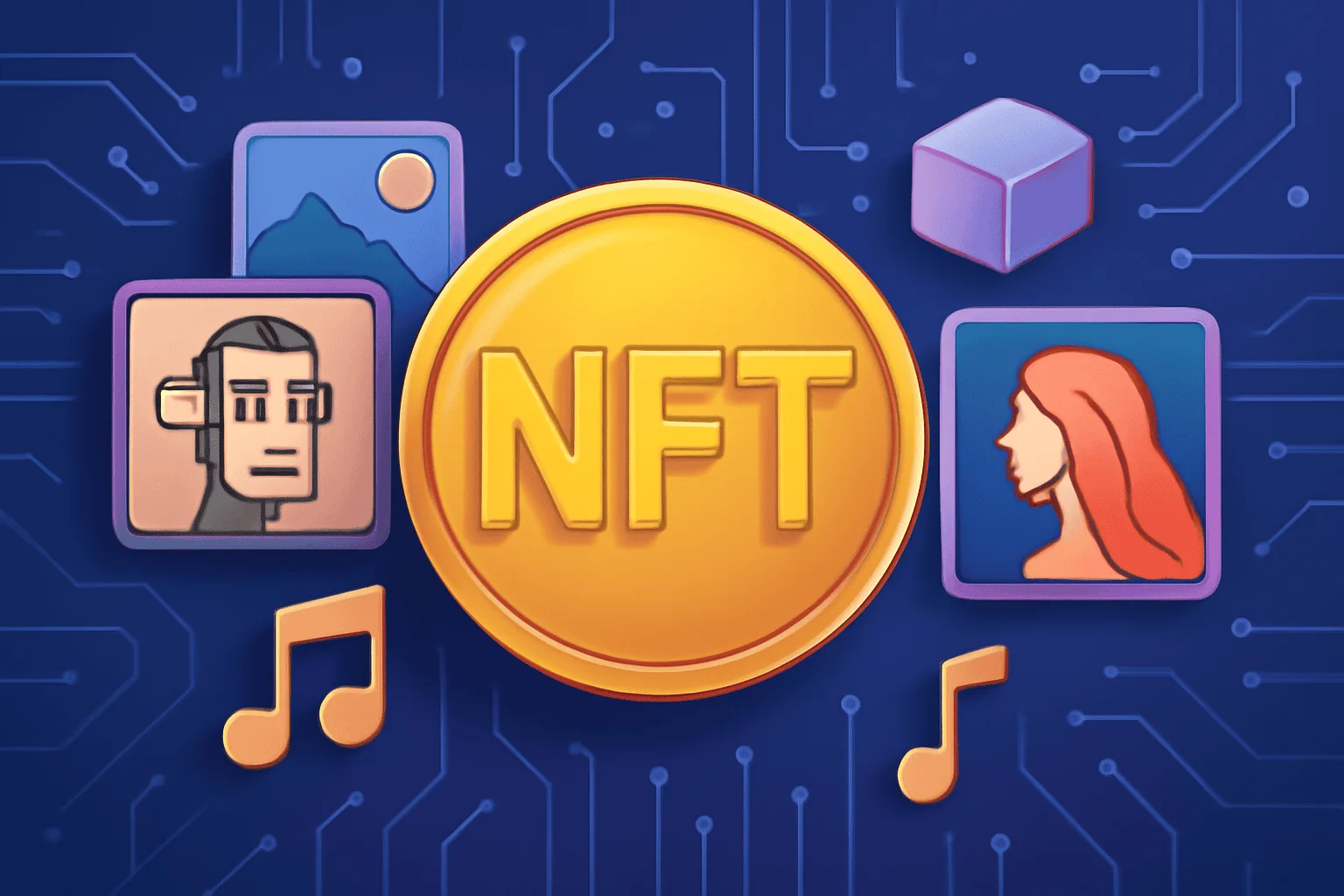
While most people first saw NFTs as profile pictures or digital art, the format is broader. If something benefits from a public, tamper-resistant ownership record, an NFT can model it. Two quick scenarios: a photographer mints a limited series of 25 images with built-in resale royalties; a game developer issues in-game items as NFTs so players actually own and trade them outside the game’s marketplace.
- Digital art and collectibles (images, animations, generative art)
- Music and media passes (albums, stems, fan club access)
- Gaming items (skins, land, characters)
- Memberships and tickets (token-gated communities, events)
- Domain names and identity (ENS, decentralized handles)
- Real-world assets as tokens (proof-of-ownership certificates)
The value isn’t always the image itself. Sometimes the NFT acts as a gateway—own the token, unlock the benefit.
Standards and Chains: Where NFTs Live
Most NFTs follow token standards that define how wallets and marketplaces interact with them. On Ethereum, ERC‑721 handles one-of-one tokens, while ERC‑1155 supports both unique and semi-fungible items in a single contract. Other networks—Polygon, Solana, BNB Chain, Tezos—offer their own standards, usually mirroring these ideas with lower fees and faster confirmation times.
| Chain | Standard | Best For | Notable Traits |
|---|---|---|---|
| Ethereum | ERC-721 | 1/1 art, unique items | Strong composability, high security, higher fees |
| Ethereum/Sidechains | ERC-1155 | Editions, gaming items | Batch minting and transfers; cost-efficient |
| Solana | Metaplex | Low-cost collections | Fast, affordable, growing ecosystem |
| Tezos | FA2 | Art platforms | Energy-efficient, artist-friendly fees |
Choosing a chain is mostly about audience, fees, tooling, and where your collectors already are.
Do You Own the Copyright?
Owning an NFT usually means owning the token, not the underlying intellectual property. Unless the creator grants explicit rights, you typically get a license to view and display the work. Some projects use permissive licenses (CC0), letting anyone remix and commercialize. Others restrict commercial use. Read the project’s terms or the smart contract’s metadata before you assume you can print T-shirts.
Why People Buy NFTs
Motivations vary. Some collectors care about patronage and provenance—supporting artists and having a signed, traceable record. Others chase utility: token-gated chat, early access, IRL events. Traders look for scarcity and momentum, similar to collectibles markets. In gaming, it’s about asset portability and resale rights.
- Identity and status: a recognizable NFT can signal membership in a culture.
- Utility: access, discounts, or features tied to ownership.
- Aesthetics and curation: enjoying art in digital frames or metaverse galleries.
- Speculation: buying with an eye on future demand.
In practice, collectors often blend these reasons. A music fan might buy a limited NFT for both the music and the chance to join a small, active fan community.
Risks and Misconceptions
NFTs come with trade-offs. Prices can swing wildly, and liquidity dries up fast when trends cool. Marketplaces may host copied or unauthorized works, so verify creator accounts. Storage matters: if media is hosted on a single server that disappears, the token’s image might break. Contract bugs and phishing are persistent threats.
A common misconception: “I can right-click and save the image, so NFTs are pointless.” The file is not the point; the verifiable ownership record is. Anyone can print a photo of a famous painting; only one museum can prove custody of the original. NFTs replicate that idea for digital items.
How to Get Started Safely
You don’t need to mint a masterpiece on day one. Start by observing markets and learning basic wallet hygiene. A small, low-cost purchase teaches more than a dozen threads on social media.
- Choose a wallet: MetaMask (EVM), Phantom (Solana), or Temple (Tezos). Write down your seed phrase offline.
- Add funds: purchase crypto on a reputable exchange and transfer to your wallet. Double-check addresses.
- Explore reputable platforms: OpenSea, Blur, Foundation, Objkt, Magic Eden. Verify collections via official links.
- Review metadata: look for creator address, provenance, royalties, and storage (IPFS/Arweave preferred).
- Use a hardware wallet for significant assets; sign only what you understand.
As you gain confidence, try minting on a testnet or a low-fee chain to see how metadata and royalties behave in practice.
Creator View: Minting and Royalties
Creators can mint NFTs directly via smart contracts or through no-code tools. Royalties are often set in metadata and recognized by many marketplaces, enabling a percentage on secondary sales. Enforcement varies by platform, so check current policies. On-chain royalties solutions exist, but adoption is uneven.
Pricing strategies differ: open editions with time limits can build community; 1/1 auctions aim for price discovery; tiered memberships gate access to content or events. Clear utility and transparent communication tend to outperform vague promises.
Environmental Notes
Older proof-of-work systems drew criticism for energy use. The landscape shifted: Ethereum moved to proof-of-stake, slashing its energy footprint by over 99%. Many NFT-friendly chains are already PoS. If sustainability matters to you, choose PoS networks and decentralized storage with permanence guarantees.
What’s Next for NFTs
The format is evolving beyond collectibles. Expect more tokenized tickets with anti-fraud features, on-chain loyalty programs, interoperable game assets, and media passes that bundle content rights. As wallets become simpler and risk controls improve, NFTs will feel less like crypto experiments and more like everyday digital ownership tools.