Contents
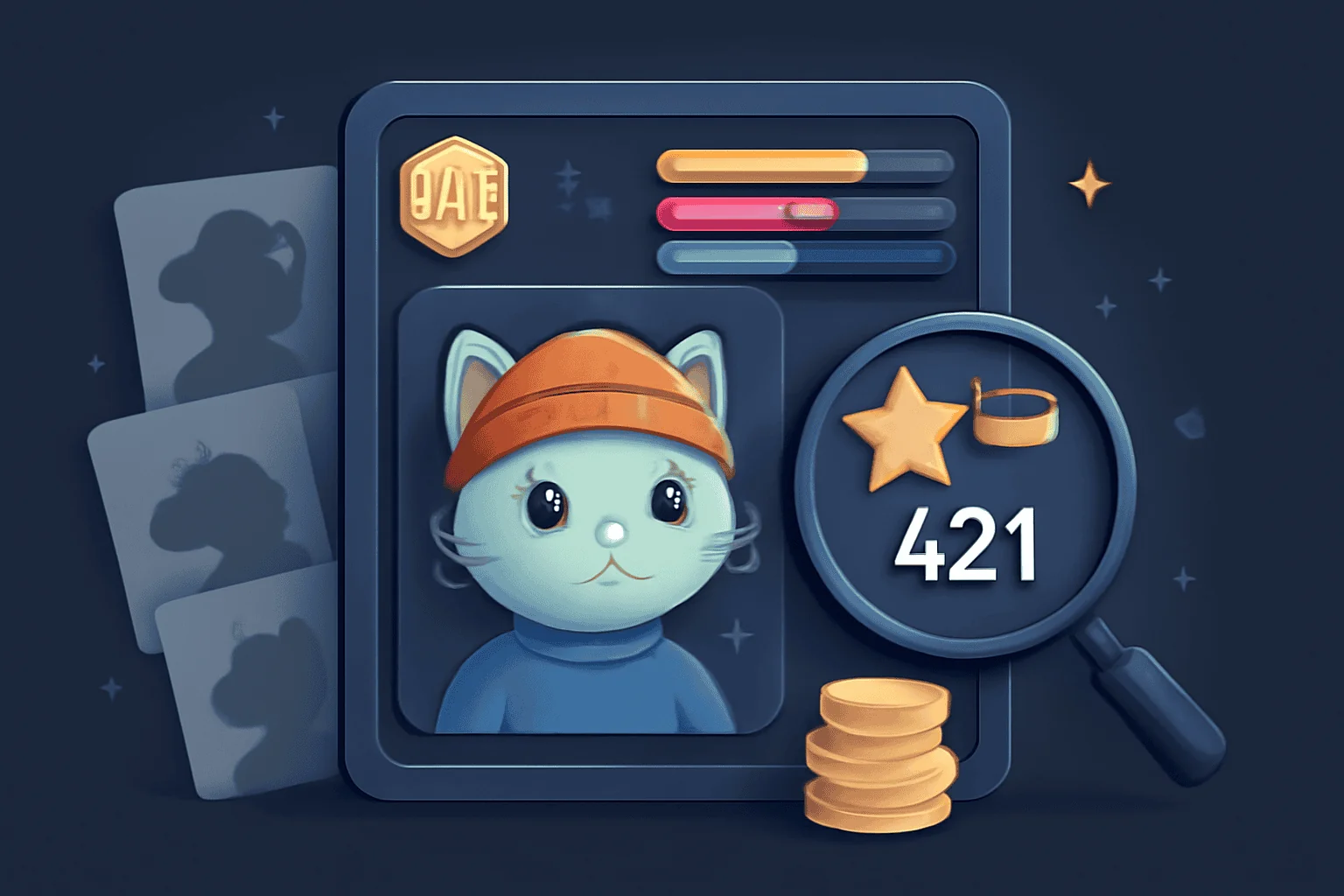
Collectors lean on rarity rankings to gauge desirability and price. Creators rely on them to balance supply and build excitement. A top 1% piece can command a sharp premium. A common piece trades closer to the floor price. Both have audiences, but rarity helps explain why values diverge.
Why rarity matters in NFTs
Scarcity has always shaped markets. In NFTs, scarcity is codified on-chain and revealed by metadata. When a collection launches, the metadata discloses trait frequencies. Marketplaces and analytics tools process that data to produce rankings. Those rankings then influence bidding wars, community lore, and long-term brand value.
Picture a 10,000-item PFP series. If only 20 pieces have a holographic visor, that trait sits at 0.2% frequency. A collector who loves sci-fi aesthetics might pay more for the holographic visor, even if the avatar’s other traits are common. Over time, patterns emerge: some traits define the look and become cultural anchors; others become grails.
How rarity ranking works
Rarity ranking usually relies on trait counts and trait frequencies. Each NFT is scored based on how unusual its combination of traits is versus the rest of the set. Different tools use different formulas, which can change the leaderboard slightly.
Below is a plain-language outline of the typical process. Note how even small differences in formula weighting can move an NFT up or down the rankings.
- Collect metadata: Parse each NFT’s traits and the collection’s total supply.
- Compute trait frequencies: Determine how often each trait appears across the set.
- Assign trait scores: Convert frequencies into scores using a chosen formula.
- Aggregate scores: Sum, multiply, or otherwise combine trait scores into a single number per NFT.
- Rank: Order NFTs by their aggregate scores from highest rarity to lowest.
Because data and formulas are transparent, independent platforms can audit and reproduce rankings. Yet minor variations—like how to treat “none” traits—keep the top slots competitive.
Common rarity formulas
Several formulas circulate in the space. The main ones try to balance ease of understanding with statistical rigor. A collector skimming rankings should recognize these patterns and know their quirks.
- Trait Rarity Score: Score of a trait = 1 divided by its occurrence rate. Rare traits get big scores; common traits get small ones.
- Sum of Trait Scores: Add each trait’s rarity score to get the NFT’s total. Simple, fast, and widely used.
- Multiplicative Models: Multiply trait scores to emphasize combinations. Can over-amplify extreme outliers.
- Statistical Likelihood: Estimate the probability of a trait combination occurring. Produces intuitive rankings for generative sets.
- Weighted Blends: Adjust weights for certain trait categories (e.g., background vs. accessory) to align with creator intent.
Micro-example: If an earring appears on 5% of items, its trait score under the 1/frequency approach is 20. If a certain background appears on 50%, its score is 2. An NFT with both could score 22 (sum) or 40 (multiplicative), which might shift its position relative to neighbors.
Trait count and the “none” dilemma
Trait count refers to how many traits an NFT has. Some collectors treat fewer traits as rarer because minimal looks can be scarce. Yet counting “none” as a rare trait can inflate scores artificially. Many ranking sites offer toggles to include or exclude “none” values from rarity calculations.
A practical approach: compare rankings with and without “none” to see how volatile a piece becomes. If an NFT jumps massively when “none” is counted, its perceived rarity may rest on a technicality rather than a visually defining feature.
Rarity vs. floor price
Rarity and price correlate, but not perfectly. Community taste, character archetypes, and narrative themes also drive demand. A mid-rarity piece with a desirable colorway can sell above a rarer piece with clashing traits.
During a bull run, top-1% items see steep premiums. In quieter markets, liquidity pools around clean mid-tier pieces near the floor. A collector aiming for quick flips may prioritize aesthetic appeal and trend alignment over purity of rarity.
Comparing ranking approaches
Different approaches suit different goals. The table below summarizes common methods and where they shine.
| Method | Strength | Drawback | Best for |
|---|---|---|---|
| Sum of Trait Scores | Easy to interpret; stable | Undervalues rare combinations | General collectors |
| Multiplicative | Highlights unique combos | Can overstate extremes | Grail hunters |
| Statistical Likelihood | Probabilistic, nuanced | Harder to explain | Data-savvy traders |
| Weighted Blends | Reflects creator priorities | Subjective weighting | Brand-driven sets |
If a project’s lore claims that “backgrounds don’t matter,” a weighted blend can downplay them and push narrative traits to the top. If the project is purely generative with no narrative hierarchy, a statistical approach may feel fairer.
How creators design for rarity
Creators plan rarity before mint. They map trait categories, set target frequencies, and test previews to avoid broken combinations. The goal: a healthy tail of common items, a memorable mid-tier, and a handful of true grails that spark conversation.
Two tiny scenarios capture the nuance. First, a sci-fi set where a “prototype chassis” appears in only 0.1% of pieces: holders treat it like a holy relic, and it anchors the brand’s mythology. Second, an art set where minimal backgrounds occur in 5% of pieces: collectors perceive these as elegant, so mid-rarity becomes culturally top-tier.
How collectors use rarity ranking
Rarity ranking isn’t just trivia. Used well, it becomes a practical filter for due diligence and trade execution. A straightforward routine can reduce mistakes and improve entry points.
- Check the collection’s total supply and trait schema to understand the design.
- Compare rankings across at least two platforms to spot formula biases.
- Review price vs. rank scatter plots to see where premiums start.
- Evaluate aesthetics independent of rank—would you still want it if ranks vanished?
- Scan sale history for your target trait combo to anchor bids.
If an item ranks #350 but has a clean monochrome look trending on social feeds, it might outperform. Conversely, a top-50 piece with mismatched colors could underwhelm. Taste plus data beats data alone.
Pitfalls and misconceptions
Not every rare trait is desirable. Some traits are rare because they are visually awkward. In young collections, early ranking snapshots can also be wrong if metadata updates post-reveal. Double-check that the data is final before making a big purchase.
Another trap: liquidity. Ultra-rare grails can be hard to price and slow to sell. Mid-tier rarities often move faster because more buyers compete for them. If you plan to exit quickly, weigh rank against market depth.
Signals beyond rarity
Rarity sits alongside other signals: artist reputation, provenance, brand partnerships, utility, and community strength. A common piece in a blue-chip collection can outperform a rare piece in a thinly traded set. Context rules the day.
During major announcements—new drops, trait-based airdrops, or game integrations—certain traits spike in demand. If a roadmap mentions a future use for “crystal” items, those trait holders might receive whitelists or boosts, bidding up prices independent of rarity math.
Best practices for using rarity rankings
Rarity rankings are most effective when combined with a disciplined checklist. The steps below keep research tight and trades grounded in both numbers and narrative.
- Confirm metadata finality: No pending trait fixes or re-rolls.
- Cross-verify ranks: Use two ranking sources and reconcile differences.
- Map aesthetics to demand: Browse social posts, Discord, and recent sales.
- Quantify premium bands: Identify where rank-based premiums accelerate.
- Set a thesis per item: Flip, hold for utility, or collect for art—then size bids accordingly.
A light spreadsheet with rank, trait notes, target price, and exit plan can keep impulses in check. Even one extra datapoint—like a recent sale of a similar trait combo—can save overpaying by a wide margin.
Bottom line on NFT rarity
NFT rarity ranking is a structured way to compare uniqueness inside a collection. It blends trait frequencies, simple math, and community taste to explain why some pieces trade at a premium. Useful, but not absolute. The strongest decisions weigh rarity alongside aesthetics, utility, liquidity, and story.
Treat rankings as a compass, not a dictator. If a piece resonates with you and the data checks out, you’re closer to a smart buy—whether it’s a top-10 grail or a clean mid-tier at a fair price.