Contents
Why projects run airdrops
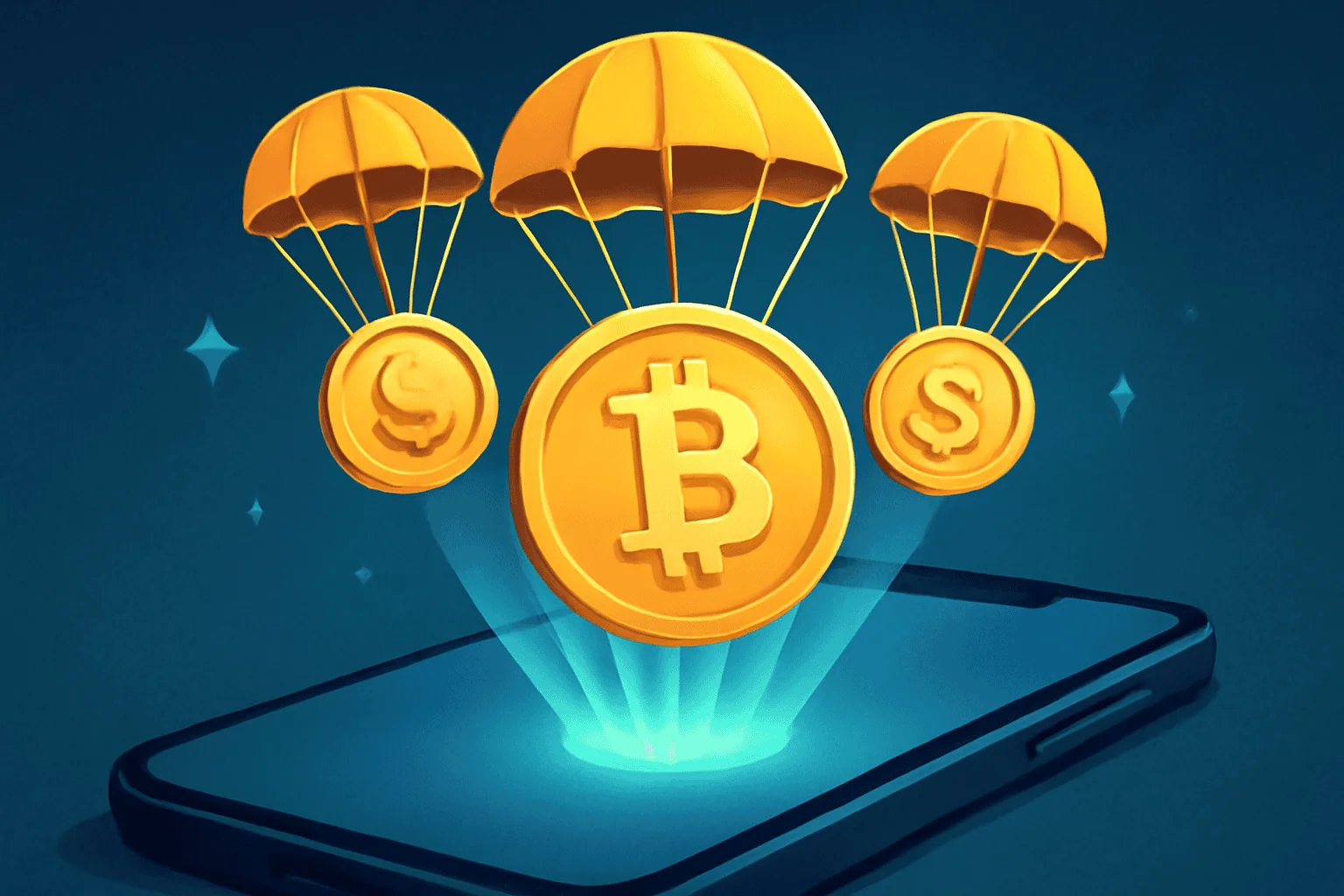
Airdrops solve a cold-start problem: new tokens need holders, liquidity, and attention. By sending tokens to real users—often those who used a protocol, held a related asset, or completed tasks—projects turn spectators into stakeholders. Airdrops can also decentralize governance quickly, making token-based votes harder to capture by a few insiders.
How crypto airdrops work
Most airdrops follow a playbook: define eligibility, take a snapshot, compute allocations, then distribute. Eligibility is set by on-chain criteria (e.g., number of transactions, volume, staking days) and sometimes off-chain tasks like joining a community channel. Snapshot dates freeze the data, so last-minute activity often doesn’t count.
Common airdrop types
Not all airdrops look alike. Some drop tokens without warning; others run quests for months. Understanding the patterns helps you gauge effort and upside.
- Retroactive airdrops: Reward past users based on historical activity. Example: a DEX allocates tokens to wallets that provided liquidity before a snapshot.
- Task-based airdrops: Users complete missions—swap tokens, bridge assets, vote on proposals—to earn points that convert to tokens.
- Holder airdrops: Tokens are sent to wallets holding a specific coin or NFT. Think of an NFT project rewarding its earliest minters.
- Staking or lockdrop airdrops: Users lock assets for a period to receive tokens, trading liquidity for allocation.
- Raffles and allowlists: Eligible users enter a draw; winners claim a set amount, often to curb sybil abuse.
Each model balances fairness, anti-sybil protections, and marketing goals. If the criteria are clear and on-chain, users can verify eligibility without guesswork.
Step-by-step: claiming an airdrop safely
Claiming is straightforward when you stick to verified sources and basic wallet hygiene. The ordered list below outlines a safe flow.
- Verify the announcement: Check the project’s official site and social channels. Cross-check smart contract addresses via a reputable block explorer.
- Confirm eligibility: Use the project’s checker or a trusted community dashboard. Avoid sites that request seed phrases or blind signatures.
- Use a clean wallet session: Disconnect other dApps, clear browser cache, and consider a fresh browser profile to limit permission carryover.
- Review the transaction: On claim, read the contract method and gas estimate. If the contract requests unlimited approvals, lower allowances manually.
- Secure the proceeds: After claiming, transfer a portion to cold storage or a hardware wallet, especially if the token has tradable value.
Small habits prevent big mistakes. A typical trap: a fake claim site that asks for your recovery phrase. No legitimate airdrop needs it—ever.
Realistic examples
Picture a Layer 2 network that rewarded wallets which bridged assets and executed at least 10 transactions before a set date. A casual user who swapped twice missed out, while a power user who interacted weekly received a meaningful allocation. In another case, an NFT marketplace rewarded early listers and buyers, so a collector with five small trades qualified while a passive holder did not.
Risks and red flags
Airdrops attract scammers and opportunists. The best defense is skepticism plus verification.
- Phishing pages: Lookalike domains and paid ads that mimic the official claim page.
- Malicious approvals: Tokens that ask for unlimited spending permissions on stablecoins you hold.
- Dusting attacks: Tiny token transfers designed to bait you into interacting with malicious contracts.
- Tax surprises: In many jurisdictions, airdrops are taxable as income at fair market value upon receipt.
- Liquidity traps: Tokens launch with thin liquidity; selling even modest amounts can tank price or fail due to slippage.
When in doubt, revoke approvals using a reputable token allowance tool, avoid signing opaque messages, and wait for third-party audits or community reviews before interacting.
Airdrops vs. bounties vs. incentives
These programs overlap but serve different purposes. The table below highlights the practical differences users tend to care about.
| Program | Effort | When You Earn | Typical Criteria | Main Risk |
|---|---|---|---|---|
| Airdrop | Low–Medium | After snapshot or claim window | Past usage, holdings, quests | Scams, taxable events |
| Bounty | Medium–High | Upon task completion and review | Content, bug reports, code | Time sink, rejection |
| Liquidity mining | Medium | Continuously over time | Providing liquidity or staking | Impermanent loss, smart contract risk |
If you prefer passive eligibility, airdrops fit better. If you want predictable rewards, bounties or liquidity mining may be more reliable than hoping for retroactive drops.
How eligibility is calculated
Teams design point systems to reward depth and quality of usage. Weighting often favors sustained engagement over one-off actions. Here’s a typical scoring idea:
- Transaction count tiers (e.g., 1, 5, 20, 100+), each with increasing points.
- Volume thresholds on swaps or bridges, with caps to deter wash trading.
- Time-based multipliers for wallets active across multiple months.
- Bonus for governance participation, such as voting or forum proposals.
Anti-sybil measures include minimum balance checks, identity proofs, or clustering analysis to spot wallets controlled by the same operator. Expect projects to tune rules right up until snapshot day.
When to sell, stake, or hold
Once tokens arrive, the clock starts. Prices can be volatile during the first hours as claimers rush to market. A simple framework helps you decide what to do next.
- Check tokenomics: Supply at launch, unlock schedule, and initial circulating share. Heavy unlocks soon can pressure price.
- Assess utility: Governance, staking rewards, fee rebates, or real demand in the protocol. Tokens with clear sinks tend to hold value better.
- Evaluate liquidity: Depth on major DEXs/CEXs, slippage at your target size, and presence of market makers.
A pragmatic approach: take profits on a portion to derisk, then reassess the remainder as the project delivers milestones. If staking rewards compensate for lockups and smart contract risk, parking a slice may make sense.
Taxes and record-keeping
Many tax authorities treat airdrops as ordinary income at the time you can control the tokens. Later, selling triggers capital gains or losses relative to that basis. Keep records: date, time, token amount, USD (or local currency) value at receipt, gas fees, and any subsequent sales. A basic spreadsheet works; specialized crypto tax software can save hours at scale.
Staying ahead of upcoming airdrops
Finding quality airdrops is part research, part habit. Focus on credible ecosystems and products with traction, not just shiny narratives.
- Monitor official blogs, GitHub releases, and governance forums of protocols you use.
- Follow reputable researchers and auditors who flag milestones and snapshots.
- Use watchlists for wallets across chains to track eligibility dashboards.
- Engage genuinely: test features, report issues, and participate in governance.
A small, consistent routine—say, one hour a week—beats frantic last-minute activity that rarely moves the needle.
Quick glossary
Jargon crops up fast in airdrop conversations. These concise definitions keep the essentials clear.
- Snapshot: A recorded state of the blockchain at a specific block; determines eligibility.
- Claim window: The period during which eligible users can collect tokens.
- Sybil attack: One actor uses many wallets to game distribution rules.
- Allowance: Permission for a contract to spend tokens from your wallet.
- Dust: Tiny token amounts sent to bait interactions or track wallets.
Knowing these terms helps you read announcements accurately and avoid costly mistakes.
Final notes
A crypto airdrop is both an on-ramp and a test. Projects gauge who shows up, how they behave, and whether tokens can seed a community with real users, not just hunters. Approach each drop with a clear process: verify, claim safely, decide your exit or staking plan, and keep records. The wins add up when you treat airdrops less like lottery tickets and more like disciplined opportunities.